How Long Do Coffee Beans Stay Fresh? A Roaster's Guide
On this page
Coffee beans taste their best from a few days to a few weeks after roasting. Right out of the roaster, they’re still releasing carbon dioxide, so most coffee benefits from a short rest. After that, the flavor slowly fades, and how fast depends on how you store it. In Philippine heat and humidity, storage matters more than most people think.
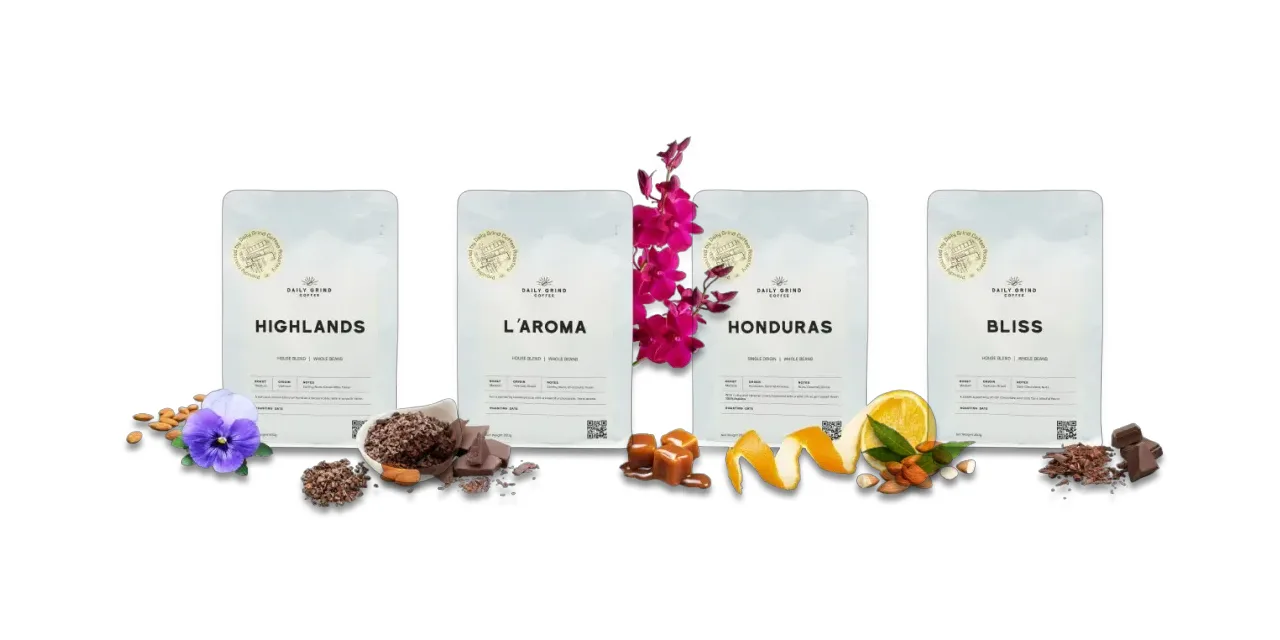
We roast our coffee in-house in San Pedro, Laguna, and every bag of Daily Grind™ beans has a roasting date on the label for exactly this reason. Here’s how to use that date, and how to keep your beans tasting fresh at home.
What happens to coffee after it’s roasted
Roasting traps a lot of carbon dioxide inside the bean. Once roasting stops, that gas starts escaping, fastest in the first few days and then more slowly. Roasters call this degassing.
Degassing matters because the gas gets in the way of brewing. When coffee is too fresh, the escaping CO₂ interferes with how water flows through the grounds, which can make a cup taste sour, flat or uneven (Methodical Coffee). As it degasses, coffee becomes easier to brew evenly, and its sweetness and complexity come through.
Heat speeds degassing up. So does grinding: ground coffee releases its gas, and loses its aroma, far faster than whole beans.
How long to rest coffee before brewing
These are typical resting times after the roast date. Use them as a starting point, since origin, processing and roast level all shift the timing.
| Brew method | Typical rest after roasting |
|---|---|
| Espresso | About 7–21 days |
| Pour-over | About 5–14 days |
| Drip | About 5–12 days |
| French press | About 3–10 days |
Source: Methodical Coffee. Partners Coffee suggests a similar rule of thumb: at least 5–7 days for filter coffee and 7–10 days for espresso, with many coffees peaking somewhere between 5 and 12 days after roasting (Partners Coffee).
Espresso needs the longest rest because it brews under pressure, which makes it the most sensitive to leftover gas.
How to read a roast date
Look for the roast date, not just a best-before date. A best-before date tells you how long the coffee stays acceptable to drink, which can be many months. The roast date tells you where the coffee is in its flavor life.
A simple way to use it:
- 0–4 days after roasting: Still degassing. Fine to drink, but it may taste uneven, especially as espresso.
- About 1–3 weeks: The sweet spot for most brewing.
- After about a month: Still good if stored well, but less expressive. Brew it, finish it, and buy fresh.
Our bags have a roasting date field on the label, so you always know where you are.
How long do coffee beans last?
Coffee doesn’t spoil the way fresh food does, but it does lose flavor over time. Well-stored whole beans stay enjoyable for weeks after roasting before they gradually turn flat (Methodical Coffee). The National Coffee Association recommends buying smaller batches more often, enough for one or two weeks, and lists about three to four months for roasted beans kept in the freezer (National Coffee Association).
Ground coffee is a different story. Grinding exposes far more of the coffee to air, so pre-ground coffee goes stale much faster than whole beans.
Why Philippine weather is hard on coffee
Coffee’s enemies are heat, light, air and moisture. In the Philippines, we get plenty of all four.
- Moisture. Coffee absorbs moisture, along with smells and tastes, from the air around it. The National Coffee Association notes this is a bigger concern in humid climates.
- Heat. Warm storage speeds up degassing and staling. A shelf near the stove or a sunny window can be the worst spot in the house.
- Air. Every time you open the bag, oxygen gets in and slowly flattens the flavor.
- Light. Clear jars look nice on a counter, but light degrades coffee.
How to store coffee beans in Philippine heat and humidity
- Keep fresh beans in their valve bag for the first few days. Bags with a one-way valve let carbon dioxide out without letting much air in, which is ideal while the coffee rests.
- Move them to an opaque, airtight container. Once the bag has been opened a few times, an airtight canister that blocks light protects the beans better than most retail bags.
- Store the container somewhere cool and dark. A cabinet away from the stove, oven toaster, rice cooker and afternoon sun. Avoid the top of the fridge, where warm air collects.
- Buy one to two weeks’ worth at a time. Smaller, more frequent orders mean you’re always drinking coffee at its best.
- Grind right before you brew. Whole beans hold their flavor far longer than grounds.
- Freeze only what you won’t use soon, in sealed portions. Freezing slows staling, but every time cold coffee meets warm, humid air, it can collect condensation. Freeze single-use portions in airtight bags, and let a portion come to room temperature before you open it.
What about the fridge? Skip it for everyday beans. A refrigerator is damp and full of food smells, and coffee picks up both. If you do refrigerate coffee, the National Coffee Association says to use a truly airtight container.
What about drip coffee bags?
Single-serve drip coffee bags are pre-ground, so the same rules apply: keep them sealed, cool and dry, and check the date on the pack. They’re a convenient way to have fresh-tasting coffee without a grinder, as long as you don’t leave them in a hot car or a sunny window. Our drip coffee guide shows how to brew one well.
Frequently Asked Questions
How long do coffee beans last after the roast date?
Most coffee tastes best from about one to three weeks after roasting, and stays enjoyable for several weeks if stored well. Frozen in an airtight container, roasted beans keep for about three to four months, according to the National Coffee Association.
Is it okay to drink coffee right after it’s roasted?
Yes, it’s perfectly safe. It just may not taste its best, because the carbon dioxide still escaping from the beans can make the brew uneven or sour, especially for espresso.
Should I store coffee beans in the fridge?
Not for everyday use. The fridge is humid and full of smells that coffee absorbs. A cool, dark cabinet and an airtight container are better.
Does coffee go bad?
Not in the way fresh food does. Old coffee is safe to drink, but it loses aroma and flavor and starts to taste flat and papery.
How much coffee should I buy at a time?
About one to two weeks’ worth, so you finish it while it’s still fresh, as the National Coffee Association recommends.
Sources
- “Freshly Roasted Coffee, Explained: Degassing, Rest, and Flavor,” Methodical Coffee.
- “A Guide to Resting Coffee,” Partners Coffee.
- “Storage and Shelf Life,” About Coffee, National Coffee Association USA.
Want beans you can date to the week? Order Daily Grind™ coffee, roasted in-house in San Pedro, Laguna, or read more about our coffee.