Barako and the 4 Types of Coffee Grown in the Philippines
On this page
Kapeng barako is Liberica coffee, grown mainly in Batangas and Cavite. It’s known for a bold, heavy, woody cup and a fruity aroma that the Philippine Coffee Board compares to jackfruit. Barako is the coffee most Filipinos think of as “ours,” but it’s only one of four kinds of coffee grown in the Philippines.
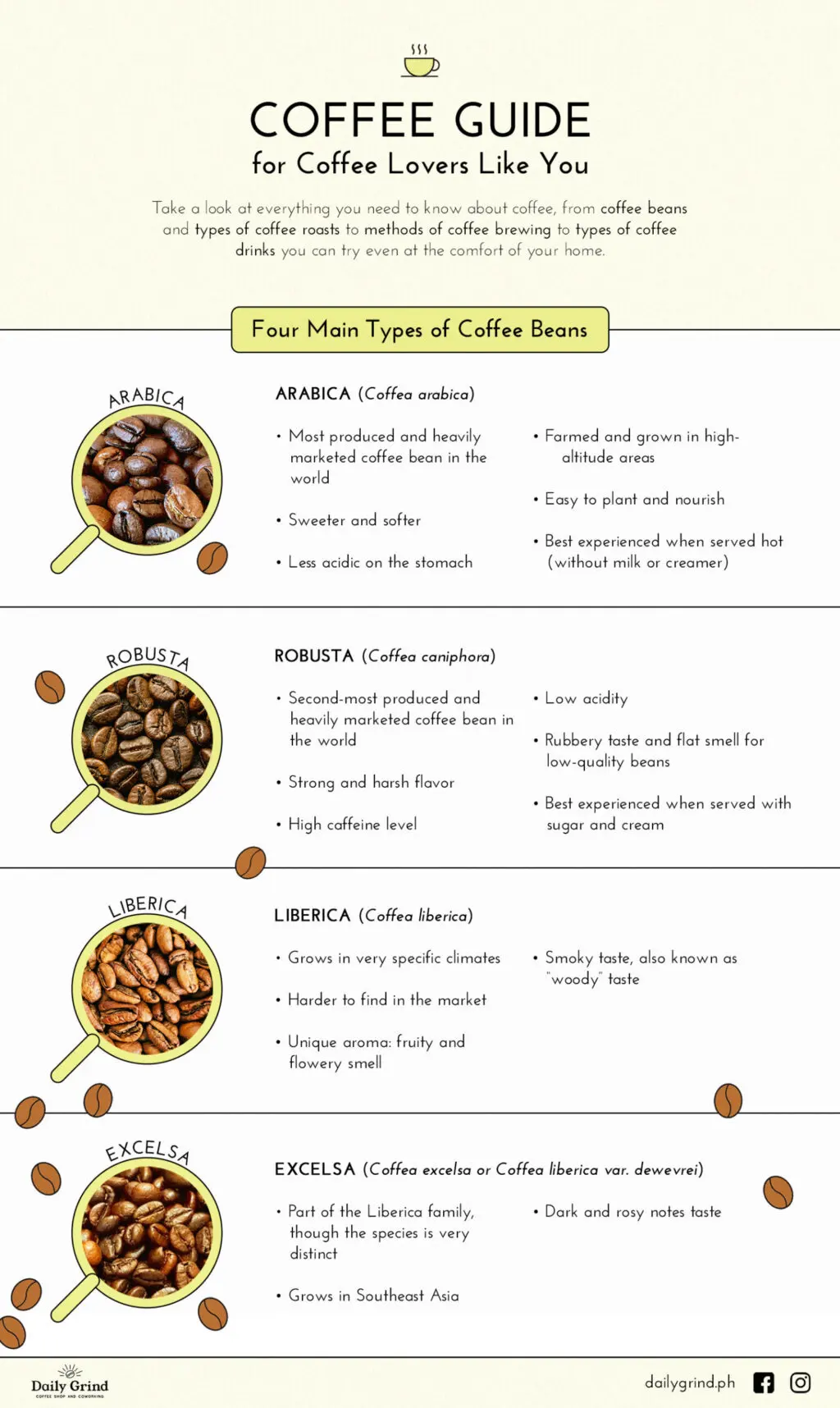
The country is one of the few places in the world that grows all four commercially traded coffees: Arabica, Robusta, Liberica and Excelsa. Here’s how to tell them apart, where each one grows, and what they taste like.
The four Philippine coffees at a glance
| Coffee | Also called | Where it grows in the Philippines | What it tastes like |
|---|---|---|---|
| Arabica | Coffea arabica | Highlands: Benguet, Sagada, Kalinga, Cotabato, Davao | Sweeter, with fruity and floral aromas, higher acidity and less caffeine |
| Robusta | Coffea canephora | Lowlands: Cavite, Bulacan, Mindoro | Strong, often bitter, with more caffeine |
| Liberica | Kapeng barako | Batangas and Cavite | Bold, woody and slightly smoky, with a fruity, floral aroma and a full body |
| Excelsa | Part of the Liberica family | Batangas, Quezon and Sorsogon | Tart and fruity but dark; often used in blends |
Growing regions and tasting notes are from the Philippine Coffee Board.
What is kapeng barako?
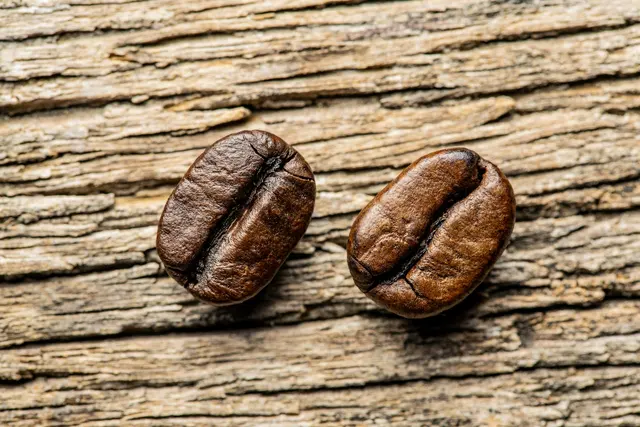
Barako is the local name for Liberica coffee. “Barako” means a strong, rugged man in Tagalog, which says a lot about the cup: it’s heavy, bold and unapologetic. The beans are noticeably larger than Arabica or Robusta and often a little lopsided.
Batangas and Cavite are barako country. It’s traditionally brewed strong, often sweetened with brown sugar, and drunk black. The Philippine Coffee Board calls Liberica “the world’s rarest type of coffee,” and it’s a small share of what the Philippines grows today.
If you’ve only had barako as a dark, smoky brew, it’s worth trying a well-roasted one. The fruity, almost jackfruit-like aroma is what makes Liberica different from every other coffee.
Robusta: most of what the Philippines grows
Robusta is the workhorse. It grows well in warm lowlands like Cavite, Bulacan and Mindoro, and it makes up the large majority of the country’s coffee; Wikipedia’s overview puts it at about 90 percent. It’s strong and often bitter, with more caffeine than Arabica, which is why it turns up in so many instant coffees and blends.
Good Robusta is also why many espresso blends taste rich and hold up well in milk. For a closer look at how the two big species differ, read our Arabica vs Robusta guide.
Arabica: the highland coffee
Arabica needs altitude and cooler weather, so in the Philippines it comes from the mountains: Benguet, Sagada and Kalinga in the north, and Cotabato and Davao in Mindanao. It’s the sweetest and most aromatic of the four, with more acidity and less caffeine, and it’s the coffee most specialty cafés build their menus on.
Excelsa: the blender
Excelsa grows in the mountains of Batangas, Quezon and Sorsogon. Botanists now group it with Liberica, though its taste is distinct: tart and fruity, but with a dark, roasty side. It’s mostly used in blends, where it adds depth and complexity.
A note on the history: Lipa, Batangas
You’ve probably heard that a Spanish friar planted the first coffee tree in Lipa, Batangas, in the 1700s, that the Philippines was once the world’s fourth-largest coffee exporter, and that coffee rust ended Lipa’s boom in the 1880s. These stories appear in many places, including Wikipedia.
At a Philippine Coffee Board webinar for International Coffee Day, historians were more careful. Food historian Felice Prudente Sta. Maria said no written documents have been found to support the friar story, and 19th-century world export statistics contradict the “fourth-largest exporter” claim (Vera Files, 2022). So it’s fair to say coffee shaped Batangas, but treat the famous dates as tradition rather than settled history.
Where does Daily Grind™’s coffee come from?
Our house blend is 70% Arabica and 30% Robusta, medium roasted in-house at our roastery in San Pedro, Laguna. It’s the coffee in every espresso drink we serve, and it tastes of dark chocolate with a bittersweet finish, slight nuttiness and a hint of tamarind. We also sell single-origin drip coffee from nine origins, including Vietnam, Ethiopia, Colombia and Honduras.
Want to know more about what we roast? See our coffee, or order beans roasted in San Pedro.
Frequently Asked Questions
Is barako the same as Liberica?
Yes. Kapeng barako is the Filipino name for Liberica coffee (Coffea liberica), grown mainly in Batangas and Cavite.
Is barako stronger than regular coffee?
It tastes stronger: bold, heavy and woody. But a strong taste isn’t the same as more caffeine. Robusta is the high-caffeine coffee, and Arabica has the least.
Where is barako coffee grown?
Mainly in Batangas and Cavite, according to the Philippine Coffee Board.
What are the four types of coffee grown in the Philippines?
Arabica, Robusta, Liberica (barako) and Excelsa. The Philippines is one of the few countries that grows all four.
Which Philippine coffee is the best?
It depends on what you like. Choose Arabica for sweetness and aroma, Robusta for strength and body, barako for a bold, traditional cup, and Excelsa if you like tart, complex blends.
Does Daily Grind™ use barako?
Our house blend is Arabica and Robusta, not Liberica. Ask at the café about what’s on our roasting list.
Sources
- Philippine Coffee Board, “The Beginner’s Guide to the Main Types of Coffee,” August 1, 2021.
- R.C. Ladrido, “Kape: Myths, tall tales, and history,” Vera Files, October 15, 2022.
- “Coffee production in the Philippines,” Wikipedia.